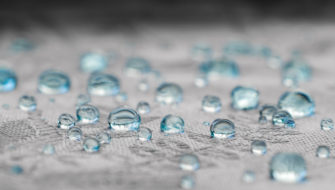

Waterfronts around the world are facing a new era of pressure. Rising sea levels, intensifying storm surges, and increased tidal action are placing massive demands on coastal and marine infrastructure. Ports, seawalls, ferry terminals, and waterfront developments are seeing accelerated wear — not over decades, but sometimes within years of construction.
For engineers, developers, and municipalities, the message is clear: traditional concrete solutions are no longer enough for marine environments.
Long-term resilience starts with durability built directly into the concrete mix.
The Harsh Reality of Marine Exposure
Concrete in marine environments faces some of the toughest conditions found anywhere in the built world. Key challenges include:
1. Constant Water and Chloride Ingress
Saltwater penetration leads to corrosion of reinforcing steel, spalling, cracking, and structural deterioration.
2. Abrasion and Erosion
Wave action, boat traffic, suspended sediment, and ice movement continuously wear down concrete surfaces.
3. Freeze-Thaw Stress
In cold regions, the repeated freezing and thawing of water trapped inside concrete dramatically accelerates cracking and degradation.
4. Increasing Storm Intensity
Storm surges and high-energy wave events test concrete performance far beyond historic design assumptions.
When these forces combine, even high-quality traditional concrete can fall short — leading to costly repairs, shutdowns, and shortened structure lifespan.
Smart Concrete®: A More Durable Solution for Marine Structures
To meet these challenges head-on, marine infrastructure needs integral durability, not just surface protection. Kryton’s Smart Concrete® solutions strengthen performance from within the mix, ensuring concrete can stand up to decades of harsh exposure.
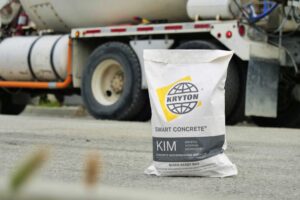
KIM® (Krystol Internal Membrane) – Permanent Waterproofing
KIM® transforms ordinary concrete into a self-sealing, watertight material. This is critical for marine applications where hydrostatic pressure and saltwater attack are relentless.
How KIM helps marine structures:
- Prevents water and chloride ingress
- Self-seals microcracks up to 0.5 mm
- Reduces long-term corrosion risk
- Eliminates membrane failures in high-moisture zones
Ideal for: seawalls, marina decks, piers, tunnels, foundations, and below-grade elements.
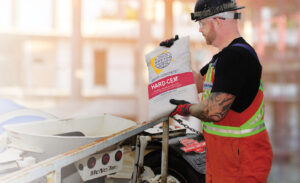
Hard-Cem® – Built-In Abrasion and Erosion Resistance
Hard-Cem® increases abrasion resistance from within the concrete, making slabs and surfaces far more resilient under wave impact, sediment scouring, and freeze-thaw erosion.
How Hard-Cem helps marine structures:
- Protects against constant wear from water, debris, and ice
- Doubles service life in high-wear zones
- Eliminates the need for surface hardeners that fail or delaminate
- Reduces maintenance and lifecycle costs significantly
Ideal for: wharf decks, pedestrian walkways, loading areas, coastal retaining structures, and splash zones.
Why Built-In Durability Matters More Than Ever
As coastal conditions continue to change, the cost of underperformance grows exponentially. Membranes can peel. Coatings can wear away. Repairs become more frequent and more expensive.
Choosing integral solutions like KIM® and Hard-Cem®:
- Extends service life
- Reduces repairs and downtime
- Minimizes lifecycle carbon footprint
- Protects long-term infrastructure investment
In short, it ensures concrete performs as long as the environment demands.
Marine Infrastructure Needs to Be Built for the Future
The pressures on today’s waterfronts will not lessen — they will intensify. As cities invest in coastal resilience, harbors modernize, and transportation hubs expand, durable concrete is becoming a strategic requirement, not a technical option.
Kryton’s Smart Concrete® technologies are already supporting marine projects across Canada, the U.S., and global coastlines. Each installation strengthens the foundation for safer, longer-lasting, climate-ready infrastructure.