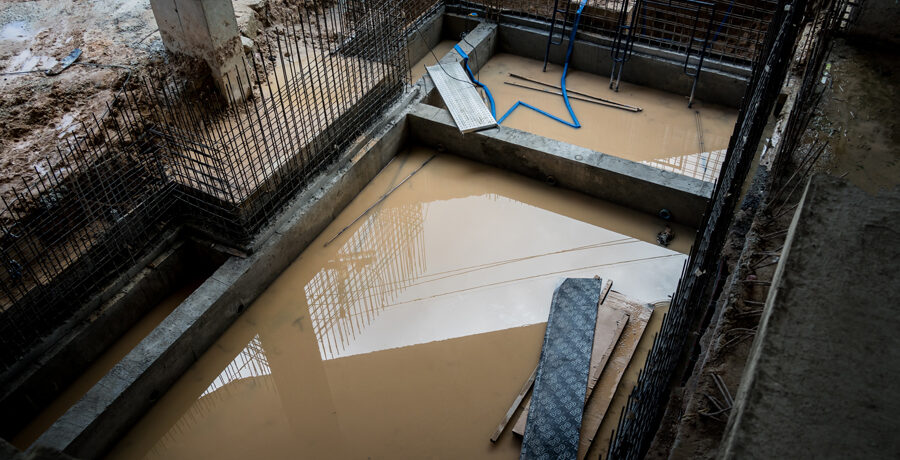
Even with advances in concrete technology and building science, below-grade waterproofing failures continue to show up on job sites worldwide. Many of these failures aren’t caused by extreme conditions or unexpected events—they come from avoidable decisions made early in the design or construction process.
Here are three waterproofing mistakes Kryton’s technical teams still encounter in the field—and how to prevent them on your next project.
1. Relying on Membranes Alone for Critical Below-Grade Protection
External membranes remain common, but they also remain one of the top sources of waterproofing issues. Problems typically arise from:
- Seams and overlaps that separate under hydrostatic pressure
- Damage during backfilling or rebar placement
- Moisture trapped behind the membrane
- Limited ability to handle movement or shrinkage cracks
Even when perfectly installed, membranes provide surface-level protection, not system-wide durability. As soon as a crack forms in the concrete—even a microcrack—water has a path inward.
A better approach:
Use integral waterproofing, such as KIM®, which turns the concrete itself into a waterproofing system. KIM forms crystals within the capillary pores and self-seals cracks up to 0.5 mm, addressing water ingress from the inside out. This eliminates membrane application risks and dramatically reduces long-term maintenance.
Crystalline Technology in action.
2. Ignoring Construction Joints and Penetrations
Even projects with good waterproofing plans often overlook their most vulnerable points:
- Cold joints
- Tie holes
- Mechanical and electrical penetrations
- Formwork transitions
- Changes in slab elevation
These areas are where leaks almost always start. When joint treatment is rushed—or worse, left to the lowest bid—water quickly finds its way through.
What works:
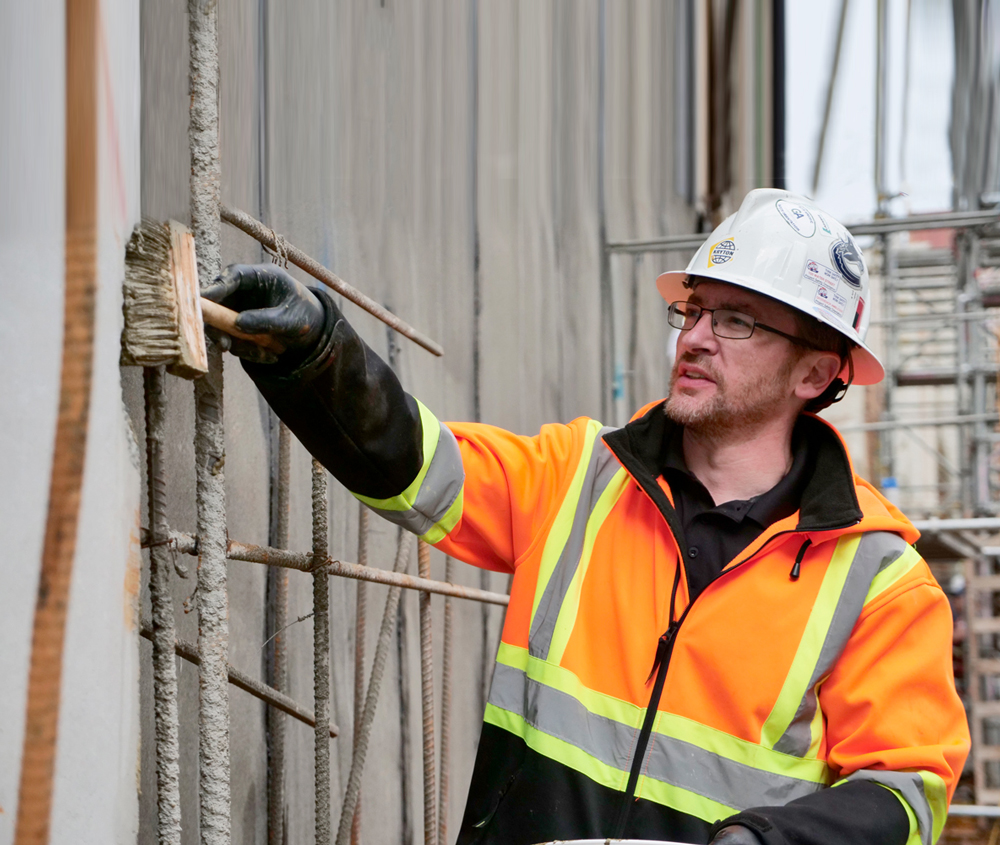
A complete Krystol Waterstop System, which includes waterstop treatment for joints, tie-hole repair, and crystalline coatings, ensures every vulnerable point receives the same level of protection as the structural concrete.
When the system is continuous, predictable, and chemical-reactive rather than surface-applied, the integrity of the entire structure increases.
3. Not Planning for Concrete Movement and Long-Term Service Conditions
Concrete shrinks, cracks, moves, and changes with temperature—yet many waterproofing designs assume a static structure. Common oversights include:
- Underestimating shrinkage cracking
- Lack of crack control or crack management strategy
- No redundancy if membranes fail
- Designs that don’t anticipate high hydrostatic pressure
- No process for long-term inspection or maintenance
The result: leaks, callbacks, and costly repairs that impact owners for decades.
How to prevent it:
Waterproofing should be integrated into the design phase, not added late in the schedule. Using systems that can adapt to movement—like crystalline waterproofing—offers far greater long-term resilience. Built-in crack healing creates durability that changes with the structure.
The Bottom Line: Durable Waterproofing Starts Inside the Concrete
Many waterproofing failures are not technical mysteries—they’re the outcome of predictable job-site oversights. By focusing on:
- Integral waterproofing
- Proper joint treatment
- Long-term crack management
Owners, designers, and contractors can significantly reduce risk, maintenance costs, and project delays.
If you’re planning a below-grade project or dealing with recurring leak issues, Kryton’s team can support your design, spec, and execution phases with proven systems and technical expertise.