Category
- Concrete Design
- Concrete Waterproofing
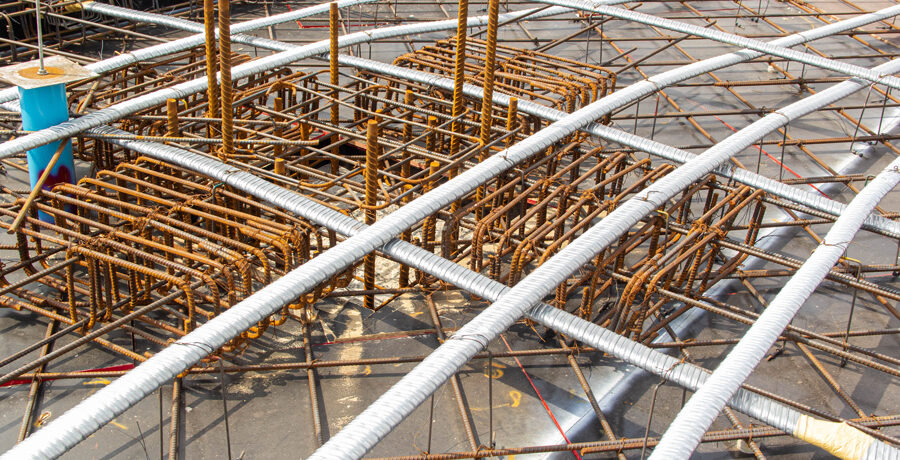
Post-tensioned (PT) slabs have become a go-to solution for podiums, parking structures, mixed-use developments, and high-rise buildings. By tensioning steel tendons inside the concrete, PT slabs achieve longer spans, thinner sections, and reduced structural weight—making them an efficient and economical choice for modern construction.
But PT slabs behave differently from conventional reinforced concrete, especially when it comes to cracking and long-term waterproofing performance. Understanding why these slabs crack—and how water uses those cracks to penetrate the structure—is critical to building durability into the design.
Below is a clear overview of PT cracking behavior, why it matters underground, and why choosing the right waterproofing system makes a measurable difference in risk, cost, and long-term performance.
1. All Concrete Cracks—But PT Cracking Is Expected and Functional
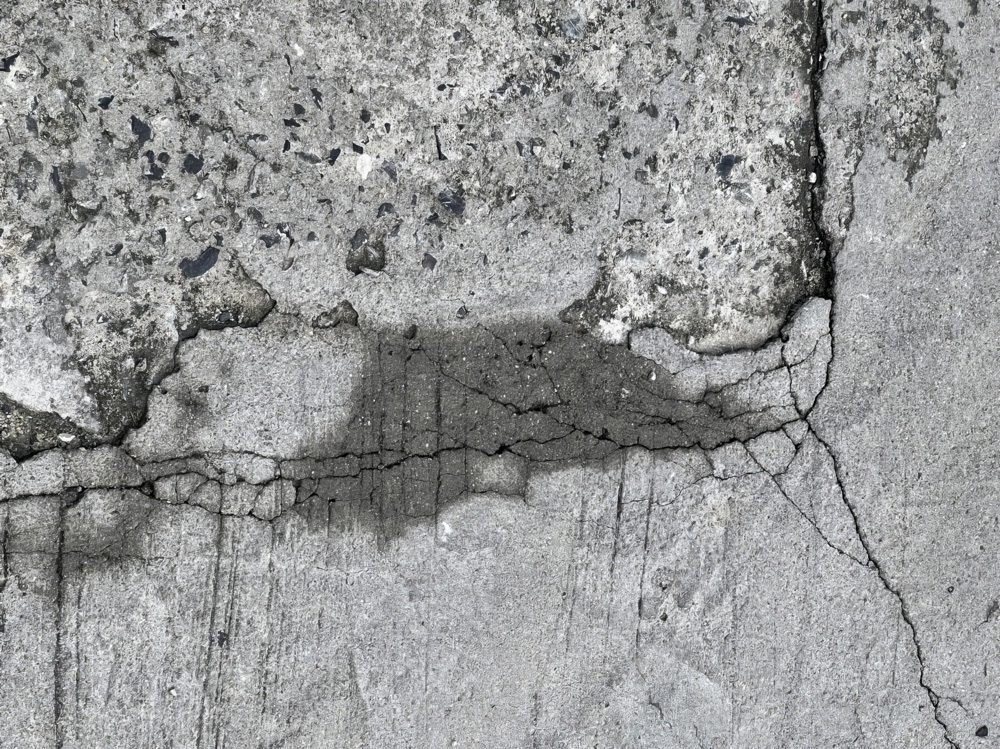
Every slab of concrete will crack. In fact, engineering standards assume it.
In post-tensioned systems, cracking is not just expected—it is part of how the slab distributes loads. After the tendons are stressed, the concrete experiences:
- Short-term elastic shortening
- Long-term creep and shrinkage
- Localized tension around anchorages
- Movement along tendon profiles
- Stress redistribution during service
These behaviors create fine, distributed cracks that are normal in PT structures. They are not signs of structural failure—but they are pathways for water.
And that matters most in below-grade applications where PT slabs are part of the foundation, elevator pits, stormwater systems, or parking podiums exposed to moisture.
2. Why Shrinkage and Movement Cracks Become a Problem Below Grade
Even small cracks become major vulnerabilities when the slab sits below grade or experiences hydrostatic pressure.
Below-grade PT slabs often face:
- Constant moisture exposure
- High water table fluctuations
- Hydrostatic pressure pushing water inward
- Temperature-induced movement cycles
In this environment, movement cracks become open channels. While PT tendons control overall slab deflection, they cannot eliminate shrinkage and flexural cracks.
Membranes are not designed for this kind of dynamic cracking. Once a crack forms beneath a membrane layer:
- The membrane cannot bridge the new gap
- Water travels horizontally to penetrations or cold joints
- Leak pathways develop around anchor heads or pockets
And because most PT slabs are heavily reinforced with ducts, anchorages, and sleeves, water often migrates unseen for long distances before surfacing—making leak diagnostics difficult and expensive.
3. How Water Finds Pathways Along Tendon Ducts and Anchorages
PT slabs contain unique waterproofing vulnerabilities that do not exist in conventional slabs.
Water commonly infiltrates through:
1. Anchor pockets
The stressing pockets around PT anchors are notorious water-entry points because they involve:
- Recessed concrete
- Incomplete patching
- High localized stresses
- Cracking around bearing plates
Once water enters the pocket, it can:
- Corrode the tendon
- Migrate along the duct
- Travel to other cracks or penetrations
2. Tendon ducts
PT tendons are encased in sheathing that can transmit water longitudinally. Even a small leak can travel several meters.
3. Construction joints
Below-grade PT slabs often require multiple pours. Movement at these joints creates additional leak risks if waterproofing is compromised.
4. Penetrations and sleeves
Water always follows the path of least resistance—and in PT slabs, that path is often around embedded hardware.
The takeaway:
PT slabs have more built-in leak paths than conventional slabs, and movement makes them harder to waterproof with surface-applied products.
Why KIM Is the Perfect Fit for Post-Tension Slabs
Traditional waterproofing systems—especially membranes—simply cannot adapt to the unique movement and tension behaviors of PT concrete.
Membranes fail because they:
- Do not self-seal cracks
- Cannot follow PT movement
- Are easily damaged during stressing
- Create weak points at anchors and penetrations
- Provide protection only on the surface, not within the concrete
KIM®, on the other hand, waterproofs the entire PT slab from the inside out.
What KIM does that membranes cannot:
- Self-seals cracks up to 0.5 mm created from PT movement
- Blocks water pathways within the concrete matrix
- Provides waterproofing even at anchor heads and pockets
- Eliminates sequencing delays (no membrane installation, protection, or repair)
- Performs under hydrostatic pressure for the structure’s entire life
With KIM, waterproofing becomes part of the PT slab—reinforced by tendon movement rather than compromised by it.
Conclusion: PT Slabs Need Waterproofing That Moves With Them
Post-tensioned slabs are incredibly efficient structural systems, but their natural cracking and movement behaviors make them vulnerable to water intrusion—especially below grade.
Membranes can’t accommodate these dynamic conditions. KIM can.
By integrating waterproofing directly into the concrete, KIM protects PT slabs where they are most vulnerable and eliminates the failure points that traditional membranes cannot address.
If you’re designing or constructing a PT slab and want a durable, long-term waterproofing strategy, Kryton’s technical team can help.